6 Watering Steps to Prepare a Winter Dormancy Schedule
The first hard frost arrives unannounced, and overnight, tender foliage collapses into black slime. Experienced growers know that winter survival begins weeks earlier, when soil temperatures hover near 50°F and roots still metabolize water. Learning how to prepare a watering schedule for winter protects dormant perennials, woody shrubs, and overwintering vegetables from desiccation stress that kills more plants than cold itself.
Materials
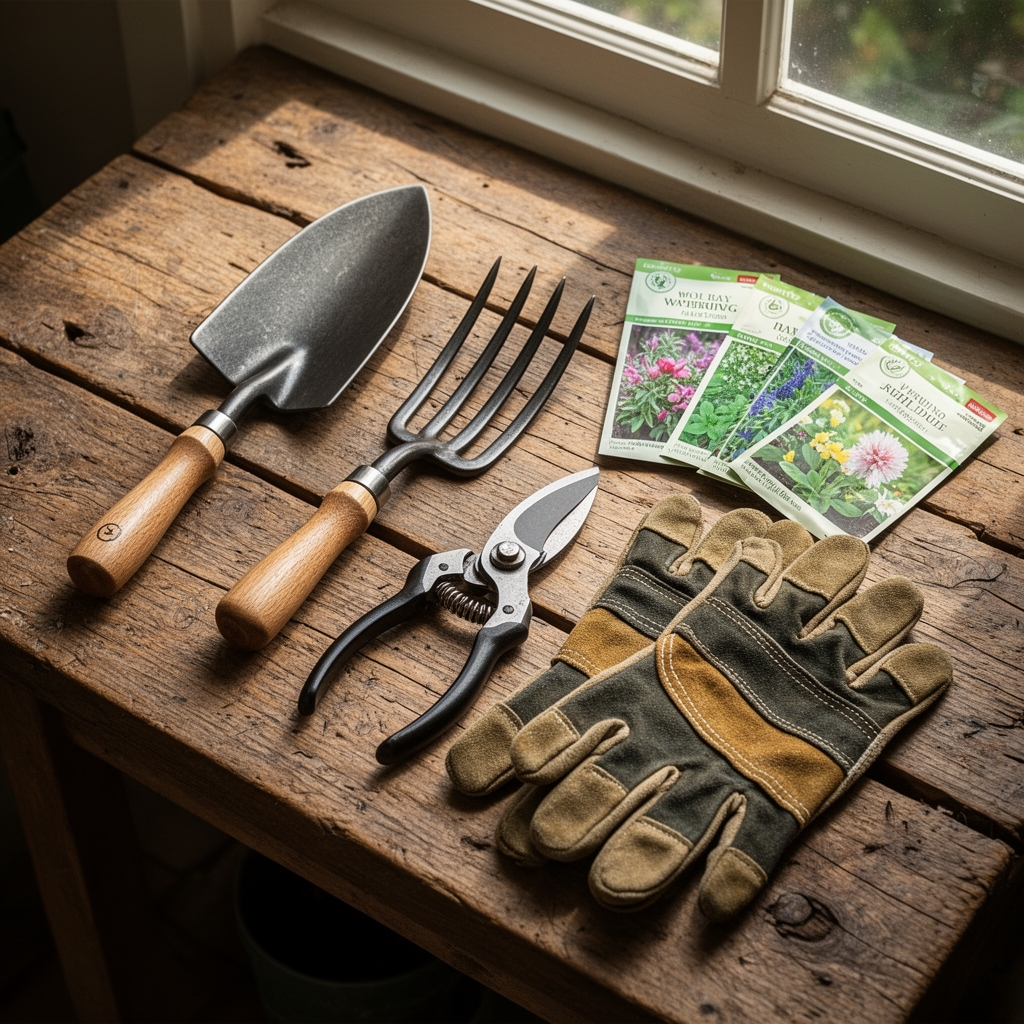
Proper winter hydration requires tools that measure rather than estimate. A soil moisture probe calibrated to 6-inch depth delivers accurate readings in clay, loam, or sand. Rain gauges with 0.01-inch graduations track natural precipitation. Soaker hoses made from recycled rubber maintain even distribution without surface runoff.
Amend beds before dormancy with compost aged 12 months minimum, pH 6.2 to 6.8. A balanced organic fertilizer at 4-4-4 NPK ratio supplies slow-release nitrogen without stimulating tender new growth. Kelp meal at 1-0.1-2 provides trace minerals and cytokinins that harden cell walls. Bone meal at 3-15-0 builds root phosphorus reserves. Cation exchange capacity above 10 meq/100g ensures nutrients remain available through freeze-thaw cycles.
Timing
Hardiness zones dictate watering cessation. Zone 5 gardeners taper irrigation by mid-October, two weeks before average first frost. Zone 6 maintains moisture through early November. Zone 7 may water into Thanksgiving week if autumn rainfall stays below 1 inch monthly.
Deciduous woody plants enter dormancy when photoperiod drops below 12 hours. Auxin distribution shifts from shoots to roots. This hormonal pivot, visible when leaf edges yellow uniformly, signals the ideal window for deep watering. Evergreens continue transpiration through winter. Their needles lose moisture even when soil freezes, making late-autumn saturation critical.
Soil temperature matters more than air temperature. When ground temps stabilize between 40°F and 45°F at 6-inch depth, roots enter quiescence but still absorb water. Below 40°F, ice crystals form in soil pores and halt hydraulic conductivity.
Phases

Phase One: Gradual Reduction (4 to 6 Weeks Before Frost)
Cut watering frequency by half while maintaining volume per session. If summer schedule delivered 1.5 inches weekly, shift to 1.5 inches every 14 days. This stresses plants enough to trigger abscisic acid production, which closes stomata and reduces cellular water content. Roots grow deeper seeking moisture.
Pro-Tip: Inoculate root zones with ectomycorrhizal fungi spores (Pisolithus tinctorius for pines, Laccaria bicolor for oaks) six weeks before dormancy. Fungal hyphae extend water uptake radius by 400 percent and remain active in cold soil.
Phase Two: Deep Saturation (1 to 2 Weeks Before Frost)
Apply 2 to 3 inches of water in a single event, wetting soil to 12-inch depth. Use a metal rod to verify penetration; it should slide easily through saturated substrate. This reservoir sustains roots through winter and prevents frost heave in fine-textured soils.
Pro-Tip: Water in early morning when temperatures range between 45°F and 55°F. Warmer water (never above 65°F) absorbs faster and carries dissolved oxygen to deeper roots. Cold water below 40°F shocks root hairs and triggers premature dormancy.
Phase Three: Monitoring and Spot-Watering (Throughout Winter)
Check soil moisture monthly during thaws. Evergreens, especially broadleaf types like rhododendrons and hollies, require supplemental water if precipitation falls below 0.5 inches per month. Apply 1 inch on days when air temperature exceeds 40°F and soil is not frozen.
Pro-Tip: Mulch with shredded hardwood bark 3 inches deep after the first hard freeze. Mulch applied too early harbors voles. Applied post-freeze, it moderates soil temperature swings by 10°F and reduces evaporation by 60 percent.
Troubleshooting
Symptom: Needle browning on evergreen branch tips by January.
Solution: Desiccation damage from insufficient autumn watering. Apply anti-desiccant spray (polymer wax emulsion) in late November. Reapply after 60 days if temperatures stay above 25°F.
Symptom: Crown rot in perennials following spring thaw.
Solution: Excess water in fall combined with poor drainage. Core aerate compacted soil to 4-inch depth. Incorporate coarse sand (0.5 to 2 mm particle size) at 20 percent by volume to improve macroporosity.
Symptom: Bark splitting on south-facing tree trunks.
Solution: Freeze-thaw cycles in dehydrated cambium. Wrap trunks with white tree wrap from November through March. Ensure deep watering occurred before soil froze.
Symptom: Root die-back visible as stunted spring growth.
Solution: Soil moisture dropped below permanent wilting point (negative 1.5 MPa tension). Install tensiometers to monitor tension. Water when readings exceed negative 0.5 MPa.
Maintenance
Evergreen hedges require 1 inch of water monthly when winter precipitation is absent. Measure with rain gauges, not guesswork. Fruit trees need 2 inches applied once in late autumn, targeting the drip line where feeder roots concentrate. Newly planted specimens (first or second year) demand 1.5 inches biweekly if snow cover is absent and temperatures permit.
Remove snow accumulation exceeding 6 inches from evergreen branches. Heavy snow loads combined with frozen wood cause structural failure. Gently brush upward from branch undersides. Avoid shaking, which fractures brittle wood.
FAQ
When should I stop watering perennials before winter?
Stop regular irrigation 10 to 14 days before the first expected hard freeze (28°F or lower). Provide one final deep watering of 2 inches, then cease until spring.
Do container plants need winter watering?
Yes. Containers freeze solid faster than ground soil, causing root desiccation. Water monthly when temperatures exceed 40°F, applying until drainage occurs.
How much water do evergreens need in winter?
Evergreens require 1 inch of water per month throughout dormancy. Broadleaf types like boxwood need 1.5 inches monthly due to higher leaf surface area.
Can I water frozen ground?
No. Water cannot penetrate frozen soil and creates surface ice hazards. Wait for thaw periods when soil temperature at 2-inch depth exceeds 35°F.
Does mulch replace winter watering?
Mulch conserves existing moisture but does not replace water. Apply mulch after deep saturation watering and after the ground freezes to prevent rodent nesting.