8 Trimming Steps to Prune a Jade Plant for a Thick Trunk
The jade plant's trunk thickens only when strategic pruning redirects auxin distribution toward vertical growth. Without understanding steps for pruning a jade plant for trunk growth, most cultivators end up with sprawling, top-heavy specimens that lack the architectural presence of mature Crassula ovata. The right cuts transform juvenile stems into lignified trunks up to 3 inches in diameter, creating the appearance of miniature trees that command attention in any collection.
Materials
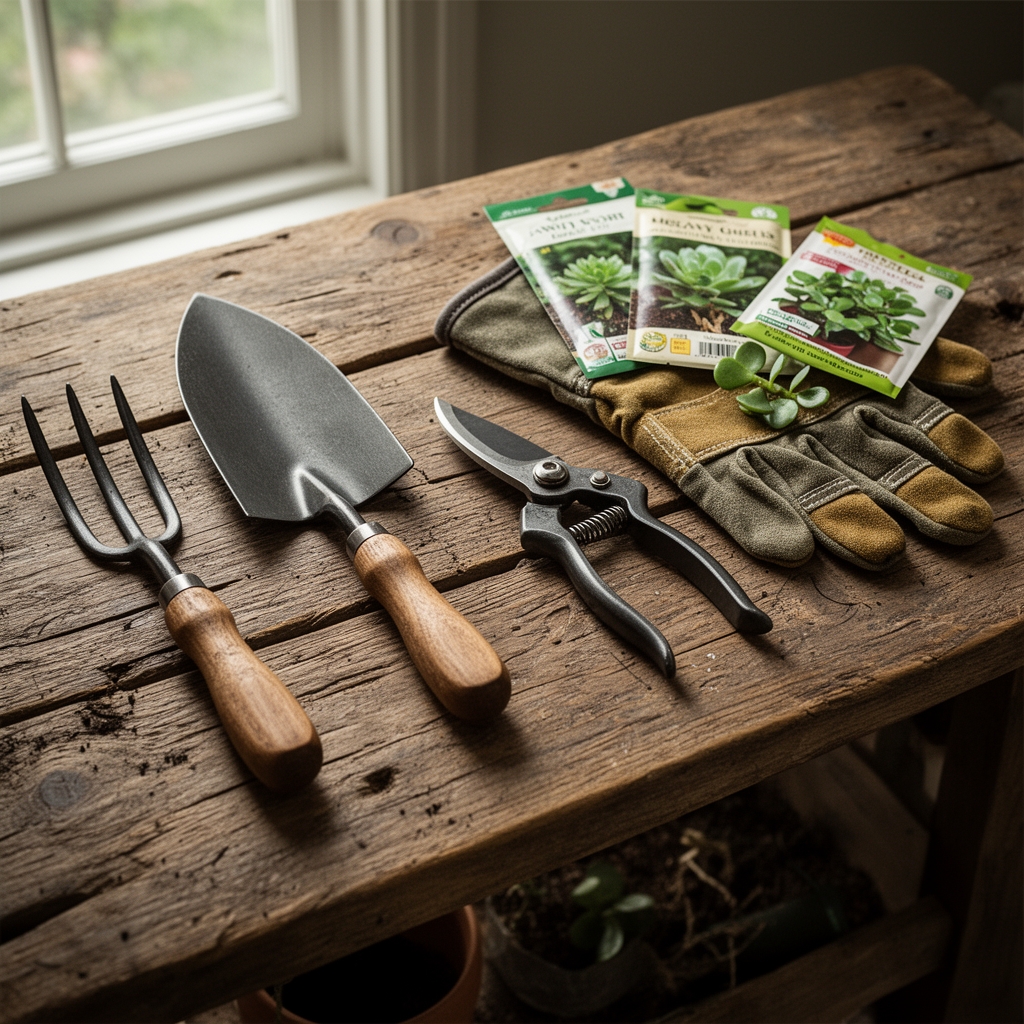
Sharp bypass pruners sterilized with 70% isopropyl alcohol prevent crushing succulent tissue. Anvil-style pruners crush stems and invite bacterial soft rot. For branches exceeding 0.5 inches in diameter, use a hand saw with fine teeth.
Rooting hormone containing 0.1% indole-3-butyric acid (IBA) accelerates callus formation on cut surfaces. Apply sulfur powder or cinnamon to large wounds as antifungal protection. Both materials maintain neutral pH and avoid tissue burn.
A balanced 4-4-4 organic fertilizer provides slow-release nitrogen without forcing leggy growth. Jade plants grown for trunk density require lower nitrogen ratios than foliage-focused specimens. Amend soil with perlite to maintain cation exchange capacity above 8 meq/100g while ensuring drainage.
Pruning sealant remains optional. Research from the University of California demonstrates that jade plant wounds compartmentalize naturally through suberization within 72 hours under proper conditions.
Timing
USDA Hardiness Zones 10 through 11 support outdoor jade cultivation year-round. In Zones 8 through 9, grow specimens in containers that overwinter indoors when nighttime temperatures drop below 40°F.
Prune during active growth from March through August. Late spring pruning after the last frost date allows maximum recovery time before dormancy. Avoid pruning from October through February when metabolic rates slow and wound healing stalls.
Mature jade plants over 5 years old tolerate aggressive pruning. Younger specimens require gentler shaping to avoid shock. Wait 60 days between major pruning sessions to allow energy reserves in the trunk to replenish.
Phases

Sowing
Begin with established jade plants at least 12 inches tall. Trunk development requires existing woody tissue as foundation. Start pruning when the main stem reaches 0.25 inches in diameter, measured 2 inches above the soil line.
Identify the central leader, the dominant vertical stem. Remove competing stems arising from the base using cuts flush with the trunk. Leave no stubs. Stubs rot and harbor Pythium species.
Pro-Tip: Inoculate roots with Rhizophagus irregularis, an arbuscular mycorrhizal fungus that improves phosphorus uptake. Better phosphorus availability supports cell wall thickening in trunk tissue.
Transplanting
Select lateral branches for removal based on their position below the desired canopy height. For a 24-inch specimen, remove all branches in the lower 8 inches. This bottom-third clearing forces energy into trunk caliper expansion rather than lateral foliage.
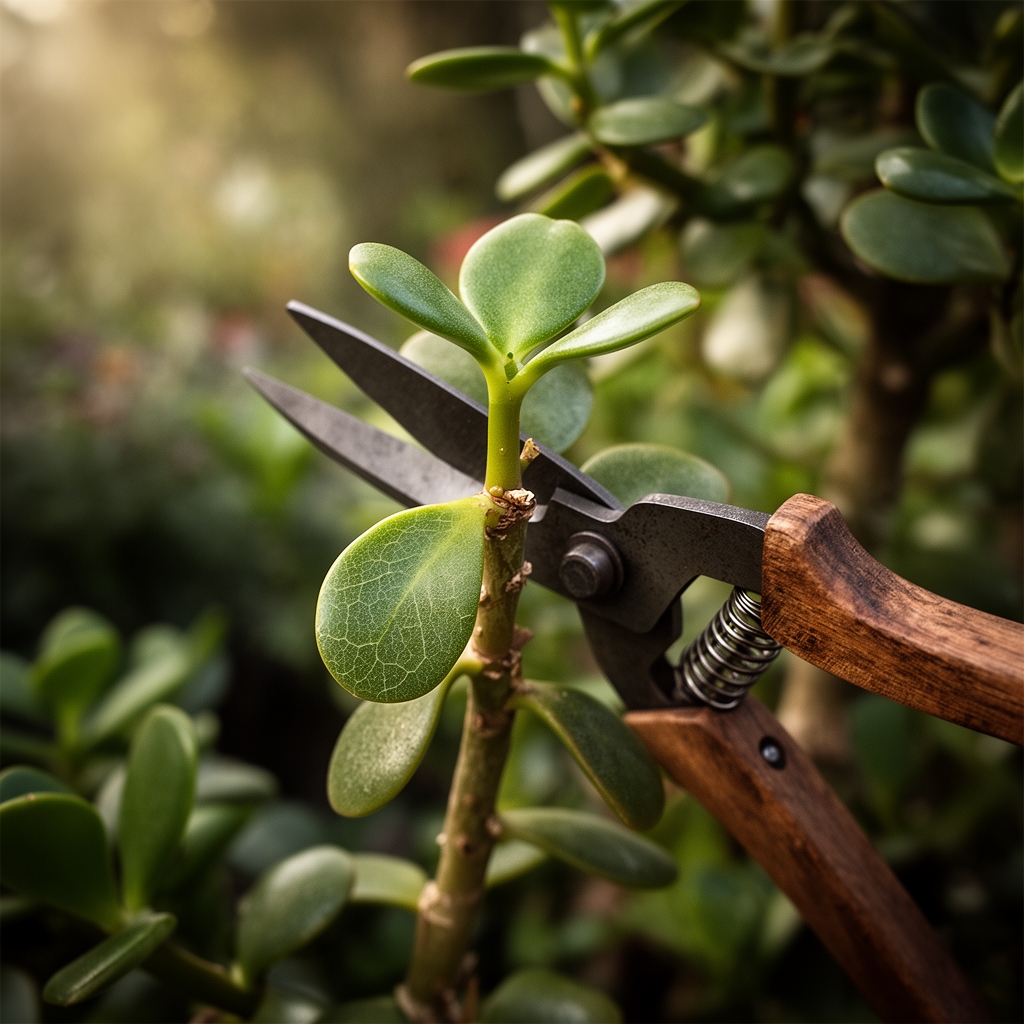
Cut branches at 45-degree angles to prevent water accumulation on wound surfaces. Make cuts 0.25 inches above nodes where dormant buds reside. These buds activate later for controlled branching.
Remove crossing branches that shade the trunk. Increased light exposure on bark tissue stimulates cambium activity and trunk diameter growth. Studies show jade plants receiving 6 hours of direct sunlight develop trunks 40% thicker than those in partial shade.
Pro-Tip: Rotate containers 90 degrees monthly. Uniform light distribution prevents phototropic bending and maintains straight trunk development.
Establishing
Pinch terminal growth on remaining upper branches. Removing apical meristems redirects carbohydrates back toward trunk tissue. Use thumb and forefinger to snap soft new growth cleanly.
Thin dense canopy areas to improve air circulation. Poor air movement encourages powdery mildew on leaves and reduces photosynthetic efficiency. Remove 20% of healthy leaves from congested zones.
Prune water sprouts, the vigorous vertical shoots emerging from the trunk or main branches. Water sprouts siphon resources from trunk lignification. Remove them while still green and flexible.
Stake only if specimens show instability. Excessive staking prevents natural trunk strengthening through mechanical stress response. Wind movement and minor swaying trigger thigmomorphogenesis, the process that adds girth to stems.
Pro-Tip: Apply diluted kelp extract (1:500 ratio) after major pruning. Cytokinins in kelp promote lateral bud dormancy while supporting trunk cambium division.
Troubleshooting
Symptom: Soft, water-soaked areas near pruning cuts with foul odor.
Solution: Bacterial soft rot from Erwinia species. Excise infected tissue 1 inch beyond visible damage. Reduce watering frequency to once every 14 days. Improve drainage with 50% perlite amendments.
Symptom: White cottony masses on trunk bark after pruning.
Solution: Mealybug infestation (Pseudococcidae family). Swab insects with cotton dipped in 70% isopropyl alcohol. Spray neem oil at 2% concentration weekly for three weeks.
Symptom: Black spots on leaves following heavy pruning.
Solution: Fungal leaf spot from stress and humidity. Remove affected leaves. Increase spacing between plants. Apply copper fungicide at manufacturer-specified rates.
Symptom: Trunk remains thin despite repeated pruning.
Solution: Nitrogen excess promotes foliage over wood. Switch to 2-4-4 fertilizer ratio. Increase light exposure to 8 hours daily. Reduce watering to every 10 days.
Maintenance
Water jade plants deeply when soil dries completely 2 inches below surface. Provide 1 inch of water per irrigation, allowing complete drainage. Overwatering causes root rot and prevents trunk lignification.
Fertilize every 8 weeks during growing season with diluted 2-4-4 formula at half-strength. Excess nitrogen creates succulent growth incompatible with trunk thickening.
Repot every 3 years using cactus mix amended with 30% pumice. Root restriction actually encourages trunk thickening by limiting vegetative expansion. Choose containers only 2 inches wider than root balls.
FAQ
How long does trunk thickening take after pruning?
Visible diameter increase appears within 6 months under optimal conditions. Mature trunk character develops over 3 to 5 years of consistent pruning protocol.
Can I prune jade plants in winter?
Winter pruning increases disease risk and slows healing. Emergency removal of damaged tissue remains acceptable, but postpone elective cuts until March.
How much can I safely remove in one session?
Limit removal to 30% of total foliage mass. More aggressive pruning shocks plants and triggers survival responses that prioritize leaf production over trunk development.
Do cut stems propagate successfully?
Yes. Cuttings 4 to 6 inches long root within 3 weeks. Allow cut ends to callus for 48 hours before inserting in dry medium.
Should I prune outdoor versus indoor plants differently?
Indoor plants require gentler pruning due to lower light levels. Remove 20% less material and extend recovery time between sessions to 90 days.