9 Harvesting Tips to Use a Garden Pruner for Grapes
Using a garden pruner for harvesting grapes and veg transforms a laborious task into precise surgical work. The clean snap of hardened steel through a grape cluster stem preserves the fruiting spur beneath. Each cut determines next season's yield. A bypass pruner with carbon-steel blades, kept at 25-degree sharpness, severs vascular tissue without crushing phloem or xylem. The tool becomes an extension of your assessment skills, distinguishing ripe from unripe through resistance alone.
Materials
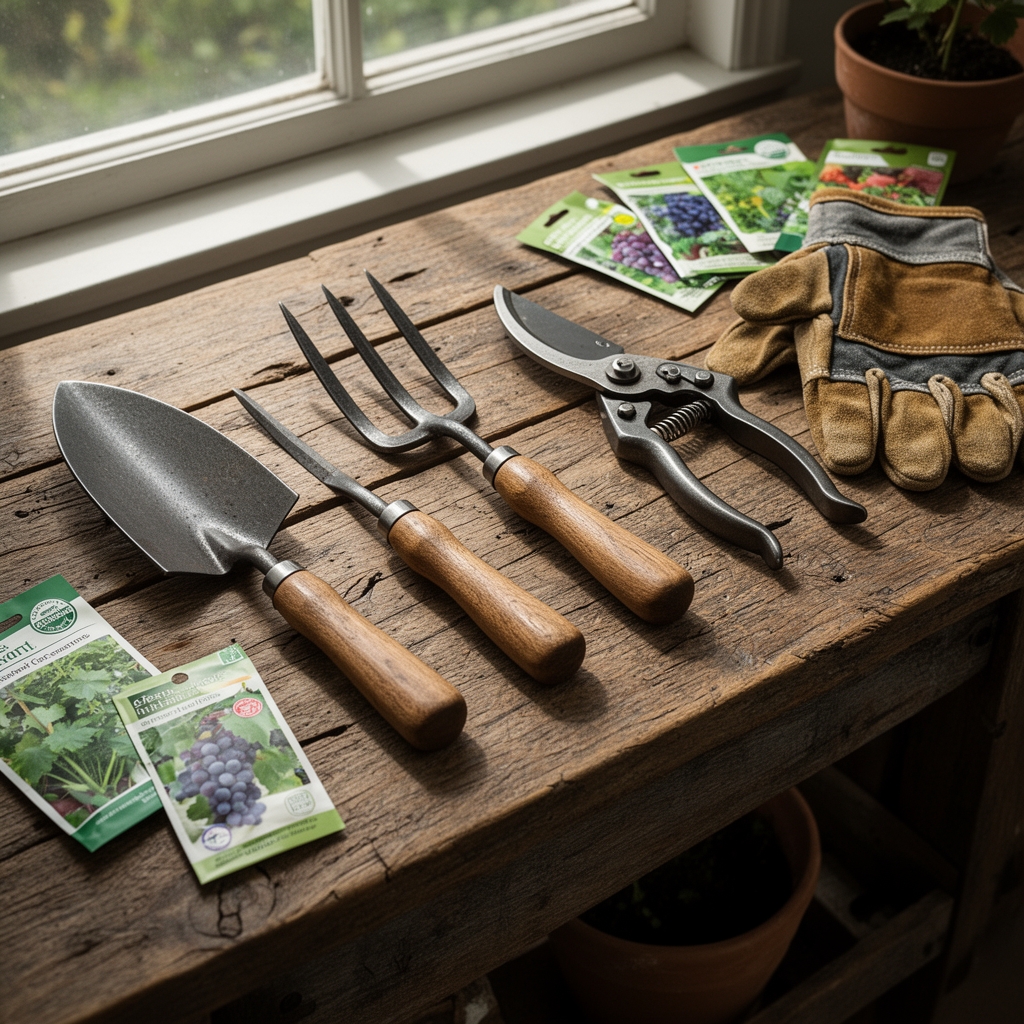
Bypass pruners with carbon-steel blades deliver clean cuts through stems up to 0.75 inches in diameter. Anvil pruners crush tissue and invite bacterial infection. Select models with replaceable springs and blades rated for 10,000 cuts minimum.
Isopropyl alcohol at 70% concentration sterilizes blades between vines. This prevents spreading anthracnose and Pierce's disease. A belt holster keeps the tool accessible while both hands assess fruit quality.
For soil preparation around established vines, apply composted manure at 2-3-2 NPK ratio in early spring. Grapevines require pH between 5.5 and 6.5 for optimal nutrient uptake. Cation exchange capacity above 10 meq/100g supports consistent auxin distribution to fruiting wood. Blood meal at 12-0-0 corrects nitrogen deficiency visible as chlorotic leaves. Bone meal at 3-15-0 strengthens cane development before winter dormancy.
Vegetable beds benefit from balanced organic fertilizer at 4-4-4, broadcast at 2 pounds per 100 square feet. This supports fruit-bearing crops like tomatoes and peppers harvested with the same pruner.
Timing
Harvest timing depends on Brix levels measured with a refractometer, not calendar dates. Table grapes reach 16-18 Brix. Wine grapes for dry reds require 22-26 Brix. Sample berries from shaded and sun-exposed clusters to assess uniformity.
In USDA Hardiness Zones 6-7, harvest begins late August through September. Zone 8 harvests commence mid-August. Zone 9 growers pick in July. Morning harvest between 6 AM and 10 AM preserves aromatic compounds that volatilize above 75°F.
Vegetable harvest timing varies by crop. Summer squash requires daily cuts when fruits reach 6-8 inches. Eggplants harvest at 4-6 inches in diameter before seeds harden. Peppers benefit from pruner use when stems lignify in late season.
Check cluster stems for brown lignification before cutting. Green stems indicate incomplete ripening despite adequate Brix. Wait five additional days and retest.
Phases
Sowing and Initial Establishment
Young vines require three years before first harvest. During establishment, prune only to shape trunk architecture. Remove all flower clusters in year one to redirect carbohydrates to root development. Mycorrhizal fungi inoculation at planting increases phosphorus uptake by 40%.
Pro-Tip: Apply granular mycorrhizae directly to rootball at 1 tablespoon per vine. Water-soluble formulations wash below the root zone before colonization.
Transplanting and Training
Second-year vines develop cordon arms along trellis wires. Select two shoots 180 degrees apart and tie at 30-inch height. Remove all other growth. This bilateral cordon system optimizes sun exposure and air circulation.
Vegetable transplants like tomatoes require pruning at first flower truss. Remove all suckers below this point to concentrate resources. Cut suckers at 45-degree angle, 0.25 inches from main stem.
Pro-Tip: Sterilize pruner blades after every fifth cut when working with solanaceous crops. Tobacco mosaic virus transfers through sap on blades.
Mature Harvest Technique
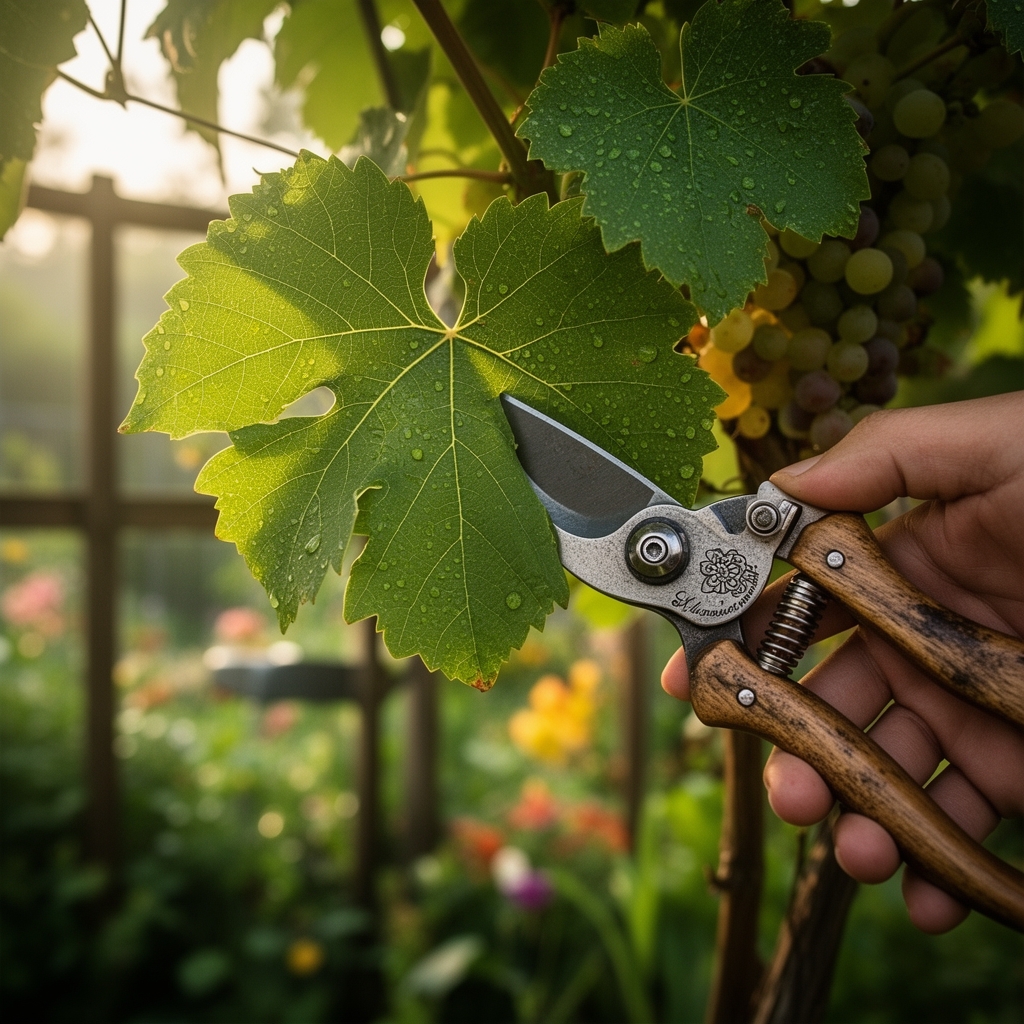
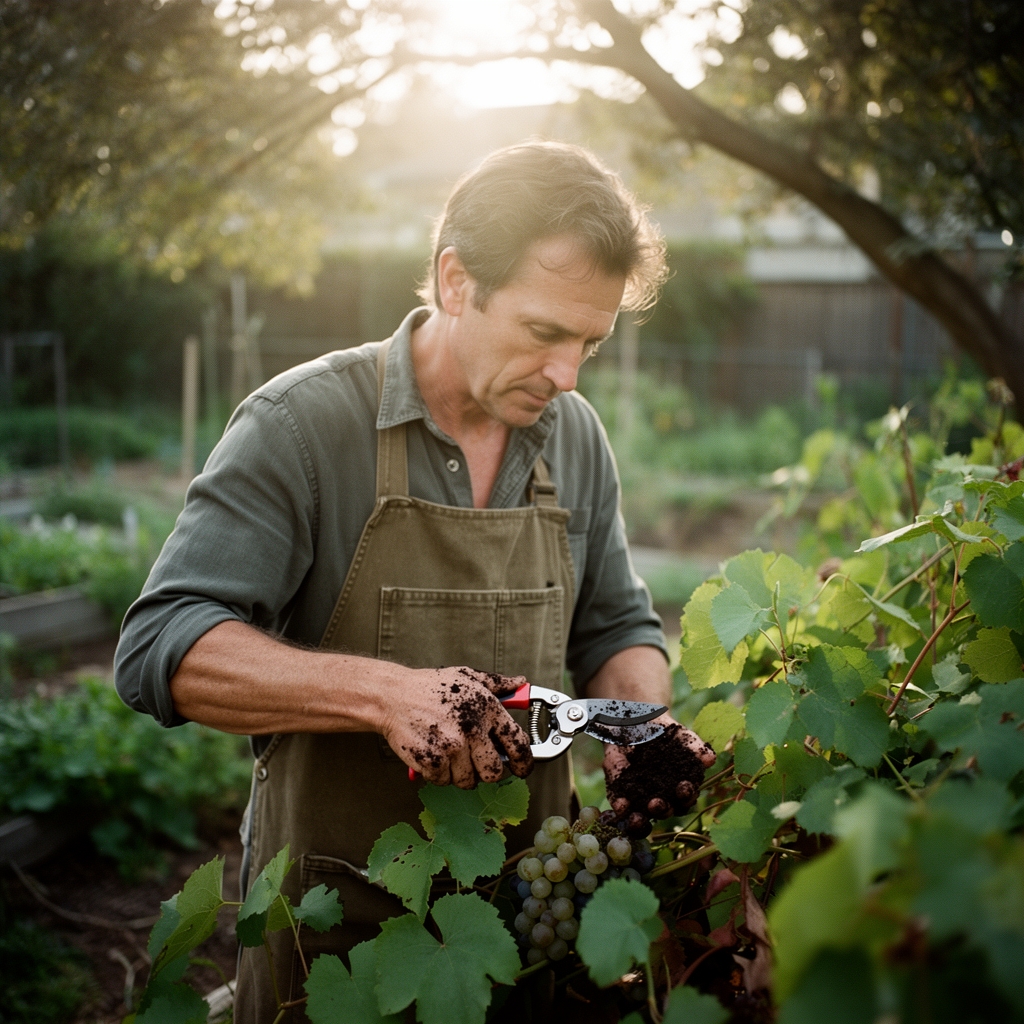
Position pruner blades perpendicular to cluster stem, 0.5 inches above the basal node. The basal node contains dormant buds for next season. Angled cuts shed water away from the wound. Cut in one smooth motion to avoid tearing bark.
Support cluster weight with your free hand before cutting. Dropping clusters damages berries and splits skins. Place clusters gently in harvest bins, never toss.
For vegetables, cut stem rather than twisting fruit. Twisting damages plant vascular tissue and reduces subsequent yields by 15-20%.
Pro-Tip: Maintain blade tension with quarter-turn adjustments weekly during harvest season. Loose blades crush rather than cut, leaving ragged wounds that invite botrytis.
Troubleshooting
Symptom: Clusters drop berries when handled
Solution: Botrytis bunch rot has weakened attachment points. Infected berries show gray fuzzy growth. Cut 2 inches above visible infection and discard. Improve air circulation with leaf removal on morning side of canopy.
Symptom: Pruner crushes rather than cuts stem
Solution: Blade edge has dulled below 30-degree angle or tension spring has weakened. Sharpen with 300-grit diamond file at factory angle. Replace spring if gap exceeds 2mm when closed.
Symptom: Stems ooze sap after cutting
Solution: Excessive nitrogen from late-season fertilization creates soft, water-filled tissue. Discontinue nitrogen applications after fruit set. This condition invites fungal colonization through wounds.
Symptom: Clusters show uneven ripening
Solution: Potassium deficiency causes delayed maturation. Apply sulfate of potash at 0-0-50 analysis, 1 pound per vine in early summer. Symptoms appear as green berries interspersed with ripe ones.
Symptom: Cut stems turn black within hours
Solution: Blade contamination with bacterial canker. Sterilize between every vine with 70% isopropyl alcohol. Infected vines require copper hydroxide spray at 2 pounds per 100 gallons.
Maintenance
Sharpen pruner blades every 40 hours of use with a whetstone at the factory-specified angle. Test sharpness by cutting paper; blades should slice without tearing.
Lubricate pivot points with mineral oil monthly. Avoid petroleum-based lubricants that attract dust and grit.
Replace springs annually before harvest season. Weakened springs reduce cutting force by 30% and increase hand fatigue.
Store pruners in dry conditions with blades slightly open. Closed storage under tension weakens spring memory.
Clean blades after each use with warm soapy water and wire brush. Dried sap bonds to steel and requires solvents that damage rubber grips.
Water grapevines at 1 inch per week through drip irrigation during fruit development. Overhead watering promotes fungal diseases. Cease irrigation two weeks before harvest to concentrate sugars.
FAQ
When should I sterilize pruner blades during harvest?
Sterilize between each vine when disease symptoms appear anywhere in the vineyard. Under healthy conditions, sterilize every ten vines minimum. Carry alcohol in a belt-mounted spray bottle for rapid application.
What blade material works best for grape clusters?
Carbon steel holds the sharpest edge but requires immediate cleaning to prevent rust. Stainless steel resists corrosion but dulls faster. Titanium-coated carbon steel offers both edge retention and rust resistance.
Can I use the same pruner for vegetables and grapes?
Yes, with sterilization between crop types. Fungal pathogens like powdery mildew are host-specific and will not cross-contaminate. Bacterial and viral diseases require strict sterilization protocols.
How do I know if clusters are ready before using the pruner?
Sample five berries from different clusters. Measure with a refractometer. Uniformity within 2 Brix indicates readiness. Taste-test for acid-to-sugar balance. Seeds should be brown, not green.
What's the proper cutting angle for grape cluster stems?
Cut perpendicular to stem axis, not at an angle. Angled cuts on woody grape stems create larger wound surfaces. The exception applies to herbaceous vegetable stems where 45-degree cuts shed water effectively.