7 Simple Ways How to Create a Butterfly Garden
The scent of damp, mineral-rich earth signals a high Cation Exchange Capacity (CEC), providing the foundation for a resilient lepidoptera habitat. Success depends on maintaining high turgor pressure within host plants to ensure larvae receive adequate hydration and nutrients. When learning how to create a butterfly garden, you must prioritize the physiological needs of both the insect and the botanical host. This requires a transition from aesthetic landscaping to rigorous ecological engineering.
Materials:
The substrate is the most critical component of the habitat. Most native nectar sources and host plants thrive in a friable loam with a pH range of 6.0 to 7.0. Soil that is too acidic or alkaline will lock out essential micronutrients, leading to stunted growth and reduced nectar production.
- Soil Amendment: Incorporate organic matter to achieve a CEC of 15-25 meq/100g. This ensures the soil can hold and release essential cations like Potassium (K+) and Magnesium (Mg2+).
- Fertilizer Ratios: Use a low-nitrogen starter fertilizer. An NPK ratio of 5-10-10 is ideal for establishing perennials. High nitrogen (the first number) promotes excessive vegetative growth at the expense of flowering, which reduces the available nectar for adult butterflies.
- Physical Texture: Avoid heavy clay that prevents gas exchange in the rhizosphere. The soil should crumble under light pressure, allowing for rapid root penetration and oxygenation.
Timing:
Timing is dictated by USDA Hardiness Zones and the local photoperiod. In Zones 5 through 7, the planting window opens when soil temperatures consistently reach 55 degrees Fahrenheit. This usually occurs two to three weeks after the last predicted frost.
The biological clock of the garden must synchronize with the migration and emergence patterns of local species. Plants transition from the vegetative stage (leaf production) to the reproductive stage (flowering) based on day length and accumulated growing degree days. If you plant too early, late-season frosts will cause cellular rupture in tender seedlings. If you plant too late, the plants will not reach peak nectar production when the butterflies are most active in mid-summer.
Phases:

Sowing
Direct sow seeds for hardy annuals like Zinnia or Asclepias (Milkweed) into a prepared seedbed. Ensure a sowing depth of one-eighth to one-quarter inch to allow sufficient light for germination. Keep the soil surface consistently moist until the first true leaves appear.
Pro-Tip: Use a light dusting of vermiculite over the seeds. This improves moisture retention and prevents the formation of a soil crust, which can impede the hypocotyl from breaking the surface.
Transplanting
When moving nursery-grown perennials into the garden, dig a hole twice as wide as the root ball. Gently tease the roots to prevent girdling. Set the plant so the crown is level with the soil surface to prevent stem rot.
Pro-Tip: Inoculate the planting hole with endomycorrhizal fungi. This establishes a mycorrhizal symbiosis, extending the root system's reach and significantly increasing the plant's uptake of phosphorus and water.
Establishing
During the first six weeks, focus on root development. Remove any early flower buds to redirect the plant's energy toward the root system. This ensures the plant can withstand the high evapotranspiration rates of late summer.
Pro-Tip: Maintain consistent soil moisture to prevent auxin suppression. When a plant experiences drought stress, it produces abscisic acid, which halts growth and can lead to premature senescence of the foliage.
The Clinic:
Physiological disorders often mimic pest damage. Accurate diagnosis is essential for maintaining a healthy butterfly garden.
-
Symptom: Interveinal chlorosis (yellowing between leaf veins) on new growth.
-
Solution: This indicates an Iron (Fe) deficiency, often caused by high soil pH. Apply chelated iron or lower the pH with elemental sulfur to a range of 6.2 to 6.5.
-
Symptom: Purpling of older leaves and stunted stems.
-
Solution: This is a classic Phosphorus (P) deficiency. It often occurs in cold, wet soils where root activity is low. Improve drainage and apply a high-phosphorus liquid feed (0-20-0) to the root zone.
-
Symptom: Marginal leaf burn (browning of leaf edges).
-
Solution: This is typically Potassium (K) deficiency or salt accumulation. Flush the soil with clean water and check the Electrical Conductivity (EC) of your irrigation source.
-
Fix-It for Nitrogen Chlorosis: If older leaves turn a uniform pale yellow, the plant lacks Nitrogen. Apply a balanced organic meal at a rate of 1 pound of actual nitrogen per 1,000 square feet to restore chlorophyll production.
Maintenance:
Precision maintenance ensures a continuous nectar supply. Use a soil moisture meter to monitor the root zone; do not rely on surface appearance. Most butterfly host plants require 1.5 inches of water per week delivered at the drip line to avoid wetting the foliage. Wet foliage increases the risk of fungal pathogens like powdery mildew.
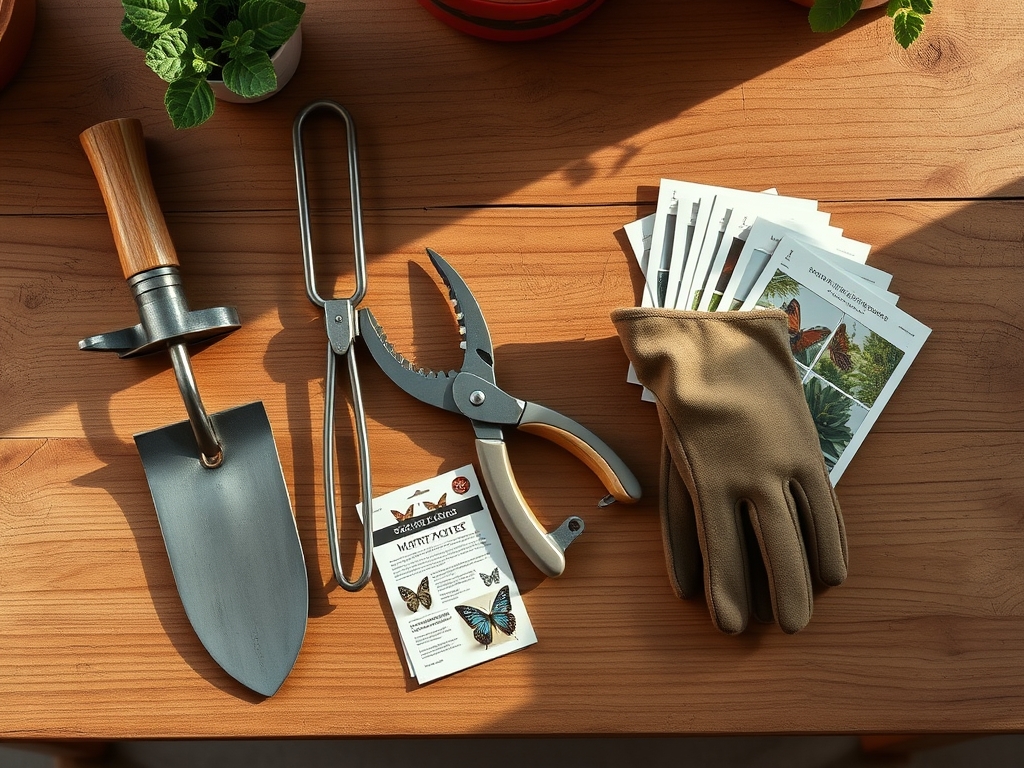
Utilize a hori-hori knife for deep weeding to ensure you remove the entire taproot of invasive species without disturbing the rhizosphere of your desired plants. For pruning, use sharp bypass pruners to make clean cuts at a 45-degree angle just above a lateral bud. This encourages branching and increases the number of floral terminal points. Deadhead spent blooms every 72 hours to prevent the plant from shifting energy into seed production, thereby extending the flowering window.
The Yield:
While a butterfly garden is primarily for observation, harvesting seeds or cuttings requires specific techniques. Harvest seeds only when the pods have turned brown and began to dehisce (split open). For floral arrangements, cut stems in the early morning when turgor pressure is at its peak.
Immediately plunge the cut stems into 110-degree Fahrenheit water to remove air bubbles from the xylem. This "hardening off" process ensures day-one freshness and prevents premature wilting. If you are harvesting host plant foliage to feed larvae in an enclosure, store the leaves in a sealed container at 40 degrees Fahrenheit to maintain nutritional density.
FAQ:
What is the best soil for a butterfly garden?
A well-draining, friable loam with a pH of 6.0 to 7.0 is ideal. Ensure a high Cation Exchange Capacity by adding organic compost. This allows the soil to retain essential nutrients like Potassium and Magnesium for flower production.
How much sun do butterfly plants need?
Most nectar-producing plants require a minimum of six to eight hours of direct solar radiation daily. High light intensity is necessary for the synthesis of sugars in nectar and helps butterflies maintain the body temperature required for flight.
Why are my butterfly plants turning yellow?
Yellowing, or chlorosis, usually indicates a nutrient deficiency or pH imbalance. Pale yellow older leaves suggest Nitrogen deficiency, while yellowing between veins on new leaves indicates Iron deficiency. Test your soil pH to ensure nutrient availability.
Should I use mulch in my butterfly garden?
Yes, apply two inches of organic mulch, such as shredded bark. This regulates soil temperature, reduces evapotranspiration, and prevents soil splashing. Avoid treated mulches that may contain chemicals harmful to the delicate larvae in the rhizosphere.