7 Best Long-Reach Pruners for High Indoor Plants
Reaching overhead to prune a mature Monstera deliciosa or sprawling Pothos at 10 feet requires more than a stepladder and hope. The best long-reach pruners for high hanging plants combine telescoping leverage, bypass blade geometry, and ergonomic pivot points to deliver clean cuts without compromising auxin distribution in the stem. Indoor gardeners managing vertical greenery in atriums, lofted ceilings, or grow-room canopies need tools that prevent torn cambium and minimize stress-induced ethylene production. A ragged cut invites fungal colonization and disrupts the apical dominance hierarchy. Proper pruning maintains light penetration to lower foliage, controls internode elongation, and redirects carbohydrate reserves toward lateral bud activation.
Materials
1. Fiskars 28-Foot PowerGear Tree Pruner
Bypass blade design. Extends 28 feet. Hardened steel blade coated with low-friction PTFE. Ideal for woody stems up to 1.25 inches diameter. Pair with a 4-4-4 organic blood meal top-dressing (pH 6.0-6.5) after heavy pruning to supply nitrogen for regrowth.
2. Corona TP 6870 Dual Compound Action Tree Pruner
Compound leverage system reduces hand force by 40 percent. Telescopes to 10 feet. Recommended for semi-hardwood stems such as mature Ficus elastica or Schefflera arboricola. Post-prune, apply a kelp extract foliar spray (0.1-0-1 NPK equivalent) to stimulate cytokinin synthesis.
3. ARS LA-180ZF3 Long Reach Pruner
Japanese SK-5 carbon steel. Fixed 6.5-foot shaft. Cleanest cut for green, succulent growth. Use on Philodendron, Epipremnum, and Syngonium. Follow with diluted fish emulsion (5-1-1) at 1 tablespoon per gallon to replace lost nitrogen from removed biomass.
4. Jameson Manual Pole Saw and Pruner
Fiberglass pole extends to 12 feet. Non-conductive for use near grow lights. Pruning head swivels 180 degrees. Match with worm castings (1-0-0 NPK, pH 7.0) broadcasted at 0.25 inch depth around the root zone to enhance cation exchange capacity post-stress.
5. Zenport ZL125 Harvest Shear
Lightweight aluminum shaft. 6-foot reach. Stainless-steel blades resist sap buildup. Best for soft stems and flowering shoots on Hoya carnosa or Ceropegia woodii. Apply a phosphorus-rich bone meal (3-15-0, pH 6.5-7.0) if flower production drops after pruning.
6. Gardenite Adjustable Hedge Shears with Extension
Multi-position handle. 7.5-foot maximum reach. Ideal for shearing dense foliage on Spider Plants or Boston Ferns. Post-shearing, irrigate with compost tea (approximate 0.5-0.5-0.5 NPK) to replenish micronutrients and beneficial bacteria.
7. TABOR TOOLS GG12A Bypass Pruner with Extension Pole
Telescopes 3 to 7.5 feet. Ergonomic foam grip. PTFE-coated blade. Works well on trailing succulents like Senecio rowleyanus. Follow cuts with a light application of granular sulfur (pH adjuster) if substrate pH exceeds 7.2, reducing iron availability.
Timing
Indoor pruning windows align with photoperiod manipulation rather than frost dates. For tropical species in USDA Hardiness Zones 10-11 grown indoors, prune during active growth phases under 14-16 hours of light daily. In temperate zones (7-9), time heavy pruning for late winter when indoor heating reduces relative humidity below 40 percent, minimizing pathogen pressure. Avoid pruning within 30 days of repotting; root disturbance coupled with foliar removal depletes stored carbohydrates. For deciduous indoor species like Ficus benjamina, prune in late February when auxin flow accelerates under increasing day length. Evergreen aroids tolerate year-round maintenance cuts but recover fastest between March and August.
Phases

Sowing Phase (Establishment of Young Shoots)
For propagated cuttings destined for vertical growth, begin training at 12 inches. Remove competing apical meristems to encourage lateral branching. Apply rooting hormone containing indole-3-butyric acid at 0.1 percent concentration. Maintain substrate EC below 1.2 mS/cm to prevent root tip dieback.
Pro-Tip: Inoculate rooting medium with Trichoderma harzianum at 10^6 CFU per gram to colonize root surfaces and outcompete Pythium species.
Transplanting Phase (Upward Training)
Once root-bound in 4-inch pots, transfer to 10-inch containers with a peat-perlite-vermiculite blend (1:1:1 by volume, pH 5.8-6.2). Install moss poles or trellis stakes. Prune nodes at 45-degree angles, 0.25 inch above axillary buds to direct auxin flow laterally. Water with 200 ppm nitrogen solution immediately post-transplant.
Pro-Tip: Position cuts on the opposite side of the desired growth direction. Auxin accumulates below the cut, promoting bud break on the upper side.
Establishing Phase (Canopy Management Above 6 Feet)
Once plants exceed reach-from-ground height, deploy long-reach pruners monthly. Remove 20-30 percent of terminal growth to prevent leggy internode stretching. Target stems thicker than 0.5 inch diameter with bypass blades, not anvil types, to avoid crushing vascular bundles. Sterilize blades with 70 percent isopropyl alcohol between cuts.
Pro-Tip: Prune during morning hours when turgor pressure is highest. Cells shear cleanly, reducing jagged edges and sap loss.
Troubleshooting
Symptom: Yellowing lower leaves within two weeks of pruning.
Solution: Excess ethylene gas from improper cuts. Increase air circulation to 100 CFM per 100 square feet. Apply foliar calcium chloride at 0.2 percent to stabilize cell membranes.
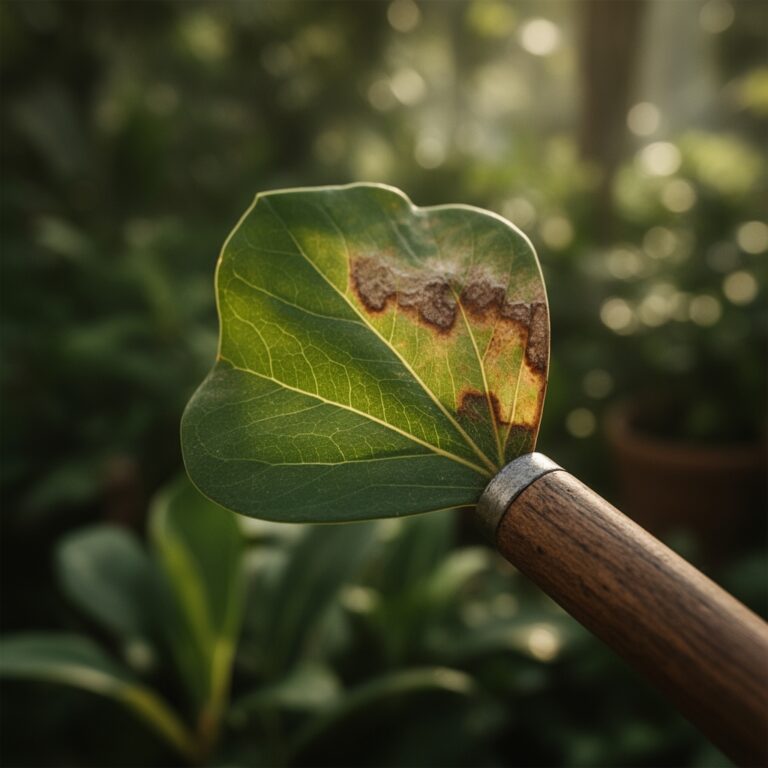
Symptom: Black, necrotic margins on cut stems.
Solution: Botrytis cinerea infection. Reduce relative humidity below 50 percent. Apply copper fungicide at 1.5 grams per liter within 24 hours of pruning.
Symptom: Stunted regrowth and bud dormancy.
Solution: Insufficient nitrogen reserves. Broadcast slow-release urea (46-0-0) at 0.5 gram per 6-inch pot diameter. Retest substrate EC after 10 days; target 1.5-2.0 mS/cm.
Symptom: Sap bleeding from cut sites for more than 48 hours.
Solution: Pruning during high xylem pressure phase. Seal large wounds with grafting wax or lanolin-based paste. Reduce watering frequency by 25 percent for one week.
Symptom: Spider mite outbreaks on upper foliage post-pruning.
Solution: Light stress from sudden canopy opening. Release Phytoseiulus persimilis at 10 predators per plant. Mist foliage with potassium silicate at 100 ppm to toughen epidermal cells.
Maintenance
Water plants pruned above 6 feet with 1 inch of water per week, measured with a rain gauge placed at soil level. Increase to 1.5 inches during active shoot expansion. Fertilize every 14 days with a balanced 10-10-10 liquid feed diluted to 150 ppm nitrogen. Monitor substrate pH monthly; amend with dolomitic lime at 2 tablespoons per gallon if pH drops below 5.5. Sharpen pruner blades after every 50 cuts using a 300-grit diamond file at the original bevel angle. Oil pivot points with food-grade mineral oil every 30 days to prevent rust. Inspect telescoping poles for hairline cracks biannually; fiberglass fatigue compromises reach stability.
FAQ
How often should I prune high indoor plants?
Every 4-6 weeks during growing season. Remove no more than one-third of total biomass per session to prevent carbohydrate depletion.
Can I use anvil pruners instead of bypass?
No. Anvil blades crush vascular tissue, disrupting xylem and phloem transport. Bypass geometry produces shearing cuts with minimal cellular damage.
What is the maximum safe reach height?
12 feet with a telescoping pole pruner. Beyond this, leverage decreases and cut precision suffers. Use scaffolding for taller specimens.
Should I seal pruning wounds?
Only for stems exceeding 1 inch diameter. Smaller wounds compartmentalize naturally via callus tissue formation within 72 hours.
Do long-reach pruners work on flowering plants?
Yes, but time cuts after bloom to avoid removing flower buds. Prune spent inflorescences immediately to redirect energy into vegetative growth.